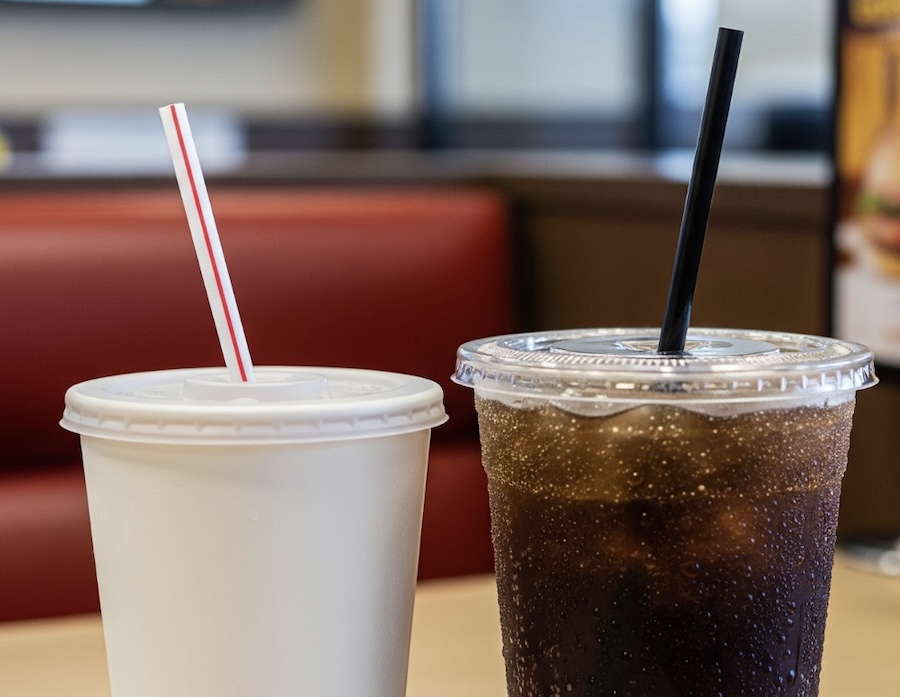
Food packaging has become an unlikely political battlefield in recent years. This battle is perfectly highlighted by drinking straws. On one side we see EU lawmakers banning plastic straws as part of a wider restriction on single use plastics in food packaging. On the other side, we see Florida and other states attempting to ban paper straws because of the threat of PFAS exposure.
This is symptomatic of a wider discussion around which is the bigger health threatL microplastics or PFAS. And as ever, the answer is complex.
Why are plastic drinking straws being banned?
For some years scientists have warned about microplastics entering the environment. Researchers have found detectable levels of microplastics in our food. And growing evidence is suggesting that they pose a significant health hazard.
One of the sources of microplastics is plastic waste that enters landfills or is discarded in the environment. In 2021, the EU banned disposable plastic straws. But that leaves fast food outlets with only two choices: switch to paper straws, or introduce reusable straws/containers. Now, we see politicians attacking paper straws as a source of harmful forever chemicals.
Why are paper straws under fire?
Paper is not known for being waterproof. So, paper straws are usually coated with a microscopic layer of PFAS to make them more water resistant. After all, who wants their straw to disintegrate into their drink halfway through?
PFAS are a large group of chemicals that are widely used to provide desirable properties like being greaseproof, water resistant, or non-stick. However, PFAS compounds are linked with all sorts of serious health issues, including cancer, inflammatory bowel disease, and immunosuppression. As a result, we now see states like Florida introduce bans on paper straws.
What about other food packaging?
Pretty much all fast food packaging contains PFAS or closely related chemicals. Even some plastic packaging is coated in PFAS (for instance, sauce bottles often have a non-stick layer inside). But the biggest culprits are paper and cardboard packaging.
- Microwave popcorn bags are thickly coated in PFAS to provide a non-stick and greaseproof surface
- Pizza boxes sometimes have a thin layer of PFAS to make them more greaseproof
- Burger wrappers are made of greaseproof paper, which typically contains PFAS or other related chemicals
- Hot beverage cups are coated with waterproof and heat resistant PFAS to stop them disintegrating
So, targeting paper straws alone does seem like it’s about politics more than public health.
So, what should you do about this?
Many consumers are left scratching their heads. Plastic straws and disposable cups are bad because they cause microplastics. But “green” options like paper straws and plates are bad because they expose you to PFAS.
Unusually, both sides of the debate are arguably right. In fact, what should be being banned is single use straws and fast food packaging generally. But that’s not always feasible.
Reusable containers
Some fast food companies such as Just Salad have a long history of providing reusable packaging for their food. Australian company, KeepCup, provides reusable cups for coffee shops across the world. However, reusable packaging hasn’t really hit the mainstream in the US.
Bring your own container
Historically, people would take their own reusable jug or bottle to the store to get it filled. But that rapidly declined with the introduction of plastic packaging and convenience stores. However, there are some independent coffee shops that allow you to bring your own mug or Stanley Cup.
Don’t reheat your fast food in its packaging
One reason microwave popcorn bags are so bad for PFAS exposure is that they are heated to extremely high temperatures. That significantly increases the amount of PFAS that leaches out of the packaging and into your popcorn. If you reheat any fast food in its packaging, you will get the same effect. So, transfer it to a microwave safe container first.
So what comes next in this debate?
So long as we value convenience and wide availability over all else, we are unlikely to see a widespread shift away from disposable packaging for fast food and beverages. Therefore, we must hope that pressure from the public and government encourages the development of more sustainable packaging, or packaging that contains proven safe chemicals. Until then, just be aware of the potential health risks posed by both plastic and paper food packaging!